
Essential Tips for Sliding Door Lock Repair
Essential Tips for Sliding Door Lock Repair
Is your sliding glass door refusing to lock? It’s a frustrating problem, but don’t call a handyman just yet. Most of the time, this is an issue you can fix in under 15 minutes with just a screwdriver.
The lock mechanism itself rarely fails. The most common reason a sliding glass door won’t lock is a simple alignment problem that develops as a house settles. This means the fix is usually a quick adjustment, not a costly repair. Let’s start with the easiest fixes first.
First, The 30-Second Check: Is It Just Dirt or Debris?
Before you grab a tool, let’s determine if the problem is the lock or something blocking it. With the door wide open, operate the lock. If the metal hook extends smoothly, your lock mechanism is probably fine. This points to an issue with how the door is closing, which is often an easy fix.
Often, a sliding door latch won’t catch because the track is dirty. Over time, dirt, pet hair, and tiny pebbles build up and prevent the door from settling properly into the frame. This tiny misalignment is all it takes to jam the lock.
Grab a vacuum with a narrow attachment and thoroughly clean the entire bottom track. Then, wipe it down with a damp rag. Close the door and try the lock again. If it works, you’re done! If not, the next likely culprit is a loose handle.
The 2-Minute Fix: Is Your Handle Loose?
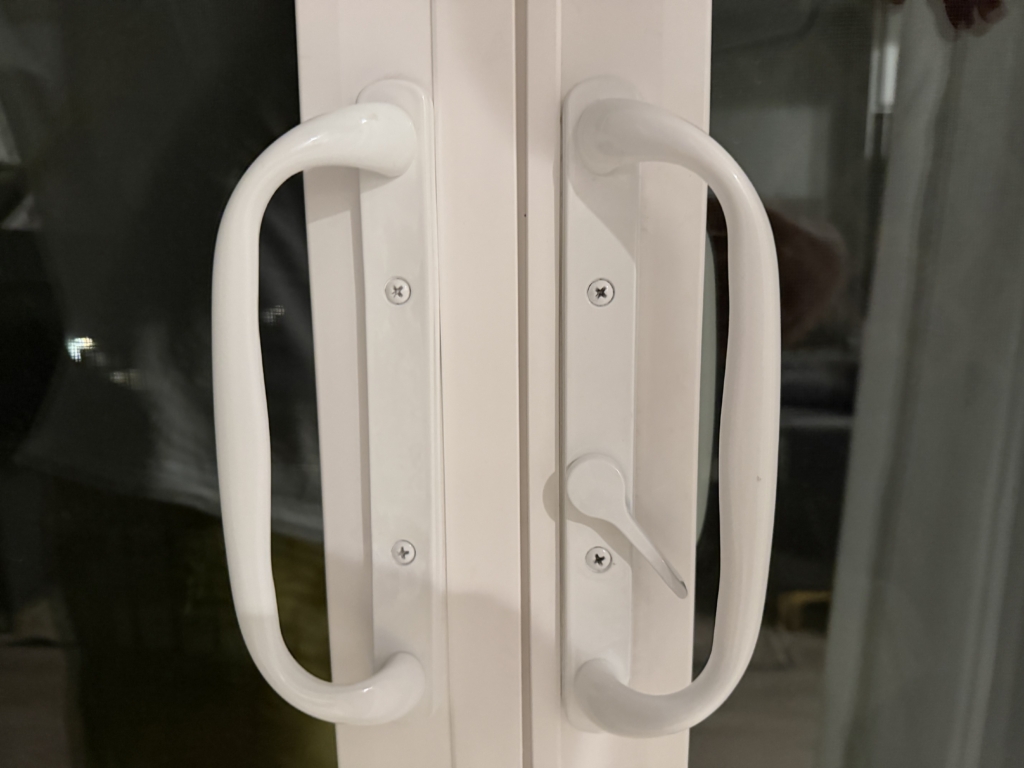
If cleaning the track didn’t solve it, check the handle itself. Give it a good wiggle. Does it feel loose? Even a small amount of play can misalign the internal lock parts and prevent the hook from fully engaging. The handle’s stability is critical for the lock to function correctly.
This is a common and simple fix. On the interior handle, you’ll typically see two prominent screws. Using a Phillips screwdriver, tighten these screws until they are snug. The goal is to eliminate the wobble, so be careful not to overtighten and crack the handle. With the handle now firm, try the lock again. If it still won’t lock, the issue is likely a simple misalignment.
How to Adjust Sliding Door Lock Alignment for a Perfect ‘Click’
If the handle is tight but your door still refuses to lock, the issue is almost certainly alignment—the single most common reason for a sliding door lock failing. As a house settles, the door can shift slightly, causing the lock’s hook to miss the hole in the frame.
That metal plate on the doorframe is called the keeper. When it’s in the wrong position, it can’t catch the hook. To fix this, grab your Phillips screwdriver and find the two screws holding the keeper. Loosen them just enough so the plate can slide up or down with some force.
Now, try to engage the lock while watching where the hook hits the keeper. Is it too high or too low? Slide the keeper a tiny amount to line it up, then tighten the screws. This may take a couple of attempts, but you are aiming for a smooth action and a solid “click.” Once the latch catches perfectly, give the screws a final turn to ensure they’re firm.
My Lock is Jammed or Stuck: Diagnosing the Lock Mechanism Itself
If your door is aligned but the lock is still stuck, it’s time to isolate the mechanism. With the door wide open, operate the thumb latch. If the metal hook grinds, gets stuck partway, or doesn’t move at all, you’ve confirmed the issue is inside the lock itself.
That internal mechanism is a mortise lock. Because these are sealed units, a jammed mortise lock is not something you can typically repair. For sliding door mortise lock troubleshooting, a failure here means it’s time for a replacement. This isn’t a sign of a bigger problem with your door; it’s just normal wear and tear. Fortunately, swapping it out is a straightforward DIY project.
A Simple Guide to Replacing Your Sliding Door Lock Set
When you’ve confirmed the internal lock mechanism is the culprit, the fix is a simple replacement. Swapping out the entire lock assembly is one of the most straightforward DIY repairs, typically held in place by just three screws.
Replacing the set usually takes less than 15 minutes:
- Remove the two main screws on the interior door handle and pull the inside and outside handles apart.
- Unscrew the single screw on the thin edge of the door that holds the mortise lock in place.
- Gently pull the old lock mechanism straight out from the edge of the door.
- Insert the new lock, reattach the handles, and tighten all three screws.
When a DIY Fix Isn’t Enough: 3 Signs to Call a Professional
Sometimes, the problem is beyond a simple adjustment or lock replacement. Knowing when to call for professional patio door repair saves you time and prevents a bigger headache. Here are three clear signs it’s time to step back:
- The Door is Warped or Damaged: If you can see a visible bow in the door, or if the frame itself is bent or cracked, no amount of lock adjustment will help. This points to a structural issue that requires a professional.
- The Rollers are Broken: If the door is extremely difficult to slide, grinds loudly, or jumps off the track, the rollers underneath are likely worn out or broken. Replacing them is an intensive job that’s best left to an expert.
- The Lock Cylinder is Damaged: If you have a keyed lock and the key spins without engaging the mechanism or won’t turn at all, you may have a broken sliding door lock cylinder. This specialized repair is often more complex than replacing the entire handle set.






Leave a Reply
Want to join the discussion?Feel free to contribute!